
The Challenge
Fungal and other plant diseases have always been a challenge for ambitious green keepers. However, due to climate change fungal diseases are occuring more frequently and new species are emerging in our lawns. Due to higher environmental protection standards, many classical pesticides are no longer an option. For the remaining ones, cumbersome documentation and residue controls are required and an increased resistance of fungi to fungicides is being reported.
The Solution
Fortunately, with PhytoFortify Turf a solution now exists to boost the plants own „immune system“ helping to defend itself to avoid or significantly reduce the need for pesticides.
PhytoFortify Turf is a plant strengthener and biostimulant based on natural phytohormones from the banana plant for protection against abiotic stress resulting in good turf regeneration. The modified phytoalexin from bananas activates the plant’s own defenses!
The advantages of PhytoFortify Turf at a glance:
- Outstanding effectiveness: Delivers consistently high performance under diverse growing conditions and demonstrates measurable agronomic benefits across multiple trials
- No resistance: No resistance to PhytoFortify Turf is known in practice, as it activates the plants own defense system
- Environmentally friendly: Harmless to humans, animals and the environment, readily biodegradable
- Contains valuable trace elements, amino acids and biopolymers: Supports growth and strengthens against abiotic stress. Provides robust, repeatable effects on plant vitality and resilience
Representative Results
We would like to present the efficacy of PhytoFortify Turf at two different golf courses.
Golf course Rottbach, Germany. Regeneration after Dollarspot outbreak.
Upper three images: Supported with PhytoFortify Turf
Lower three images: Control, no treatment
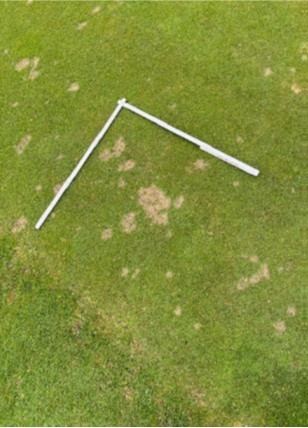
07/24/2024
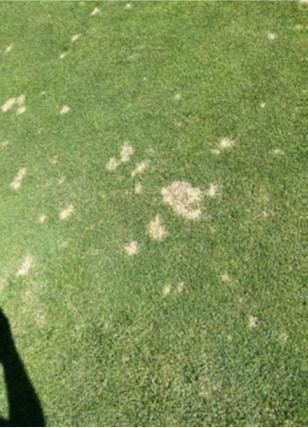
07/30/2024
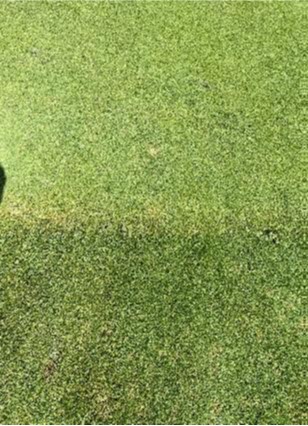
08/16/2024
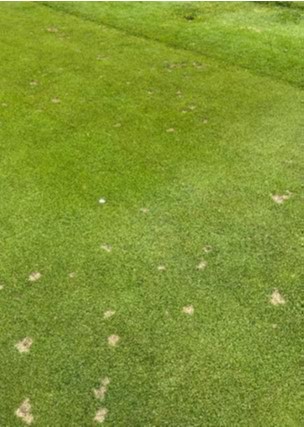
07/24/2024
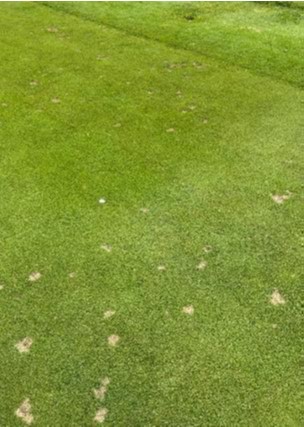
07/30/2024
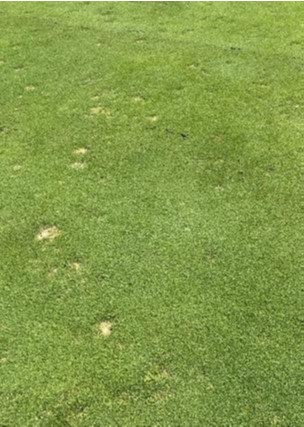
08/16/2024
Bray golf course, Ireland, May 2025: Recovery from Fusarium damage
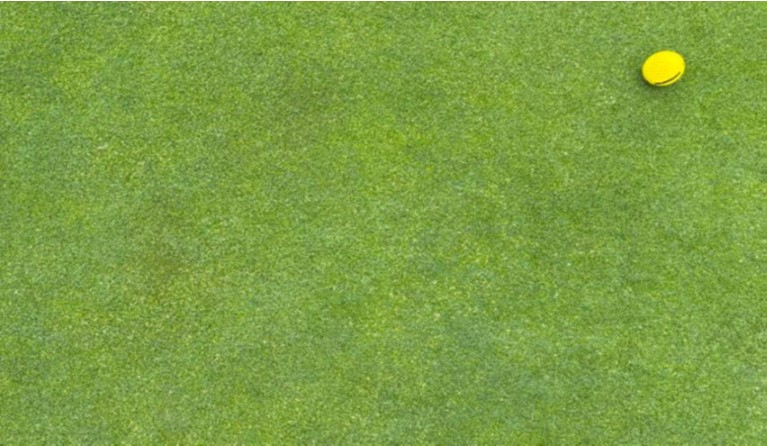
PhytoFortify was applied. After two weeks the turf damage was no longer visible.
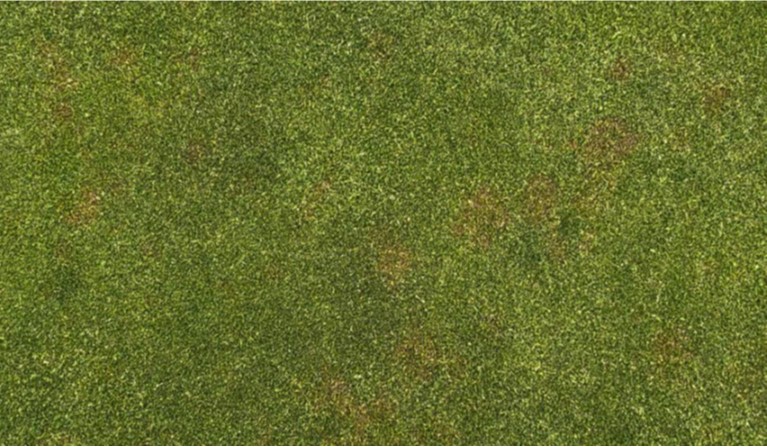
Only a fertilizer was applied. The untreated section still shows some scarring.
Summary: As PhytoFortify Turf activates the immune system of the plant and helps to regenerate better, the effect will take some time to become visible. Nevertheless, the situation is significantly better than without application of the product. Neither use of a fungizide nor of a PSM was necessary.
PhytoFortify Turf
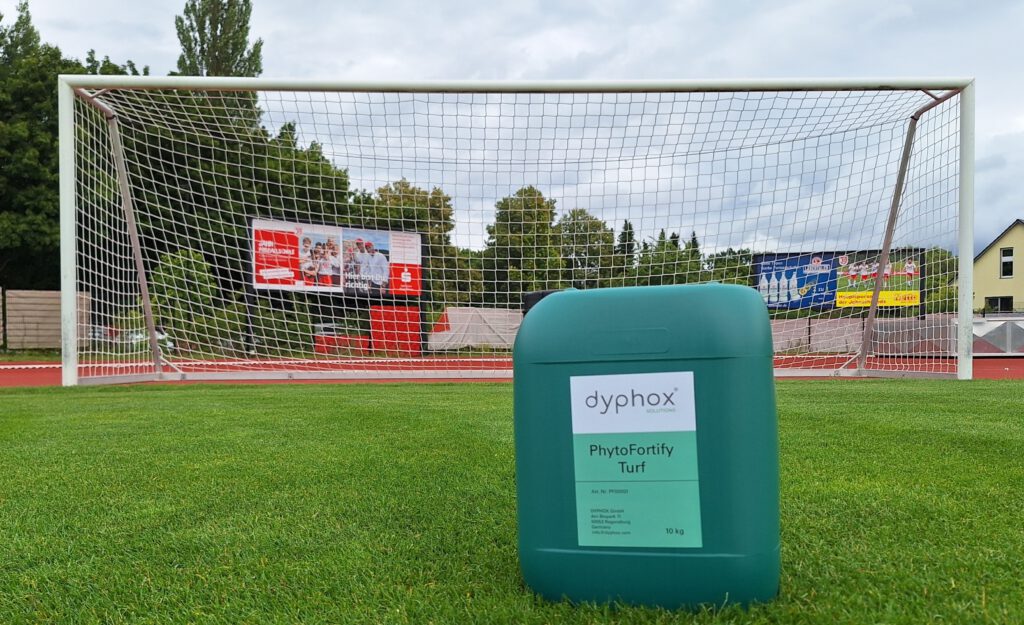
PhytoFortify Turf is available as a ready-to-use solution in 10L or 30L canisters or in 200L barrels and can be applied by spraying or watering throughout the whole growing season.
It has no side effects on humans, beneficial organisms or the ecosystem when used as intended and properly. Bees, beneficial insects and other insects are not affected.
It can be applied with the following application rates:
Utility and sports turf:
- Supportive: 0.05 litres per m² or 500 litres per ha, once every 2 weeks
- Growth phase: 0.05 litres per m² or 500 litres per ha, once a week
- In case of increased stress: 0.07 litres per m² or 700 litres per ha, 1-2 times a week
Deep-cut lawns such as golf greens:
- Supportive: 0.05 litres per m² or 500 litres per ha, once a week
- Growth phase: 0.07 litres per m² or 700 litres per ha, once a week
- In case of increased stress: 0.1 litres per m² or 1000 litres per ha, two times a week
For more detailed information, please consult our technical datasheet and do not hesitate to contact us!
The science behind
When a banana plant is attacked by a fungus or nematode, it activates the production of anigofurones (phytoalexins) to regulate its immune system and slow the spread of the disease.
Our scientists were able to successfully transfer this natural concept for healthier lawns and more sustainability! Through extensive research we managed to make such phytoalexin derivatives water soluble, stable and usable to activate the immune system of turf from within and better protect itself from (a)biotic stress.
- Changes in the Content and Biosynthesis of Phytoalexins in Banana Fruit Tsunashi KAMO , Nobuhiro HIRAI , Mitsuya TSUDA , Daie FUJIOKA , Hajime OHIGASHI
Bioscience, Biotechnology, and Biochemistry, Volume 64, Issue 10, 1 January 2000, Pages 2089–2098 - Phenalenone-type phytoalexins mediate resistance of banana plants (Musa spp.) to the burrowing nematode Radopholus similis
Dirk Hölscher, Suganthagunthalam Dhakshinamoorthy, Theodore Alexandrov and Rony L. Swennen
PNAS, December 9, 2013, 111 (1) 105-110 - Krishnamurthy, P.; Ravikumar, M. J.; Palanivelu, S. A.; Pothiraj, R.; Suthanthiram, B.; Subbaraya, U.; Morita, H. Phenylphenalenone-type phytoalexins in banana (Musa species): a comprehensive review for new research directions. Phytochem. Rev. 2023, 22 (1), 187– 210, DOI: 10.1007/s11101-022-09839-8
Resources
Datasheets and manuals for download